Wednesday, 23 January 2013

One month on from the PCC elections with Independent Dorset victor Martyn Underhill


(Date of submission and intended publication December 19th - NCTJ Portfolio) 

"The people of Dorset have spoken loud and clear, the party politics in Dorset don't work. I won in every voting area in Dorset and that says a lot, the people of Dorset have spoken…it's time to move forward." Those were the words of Martyn Underhill, the newly elected Police Crime Commissioner for Dorset, in his inaugural interview with BBC South.
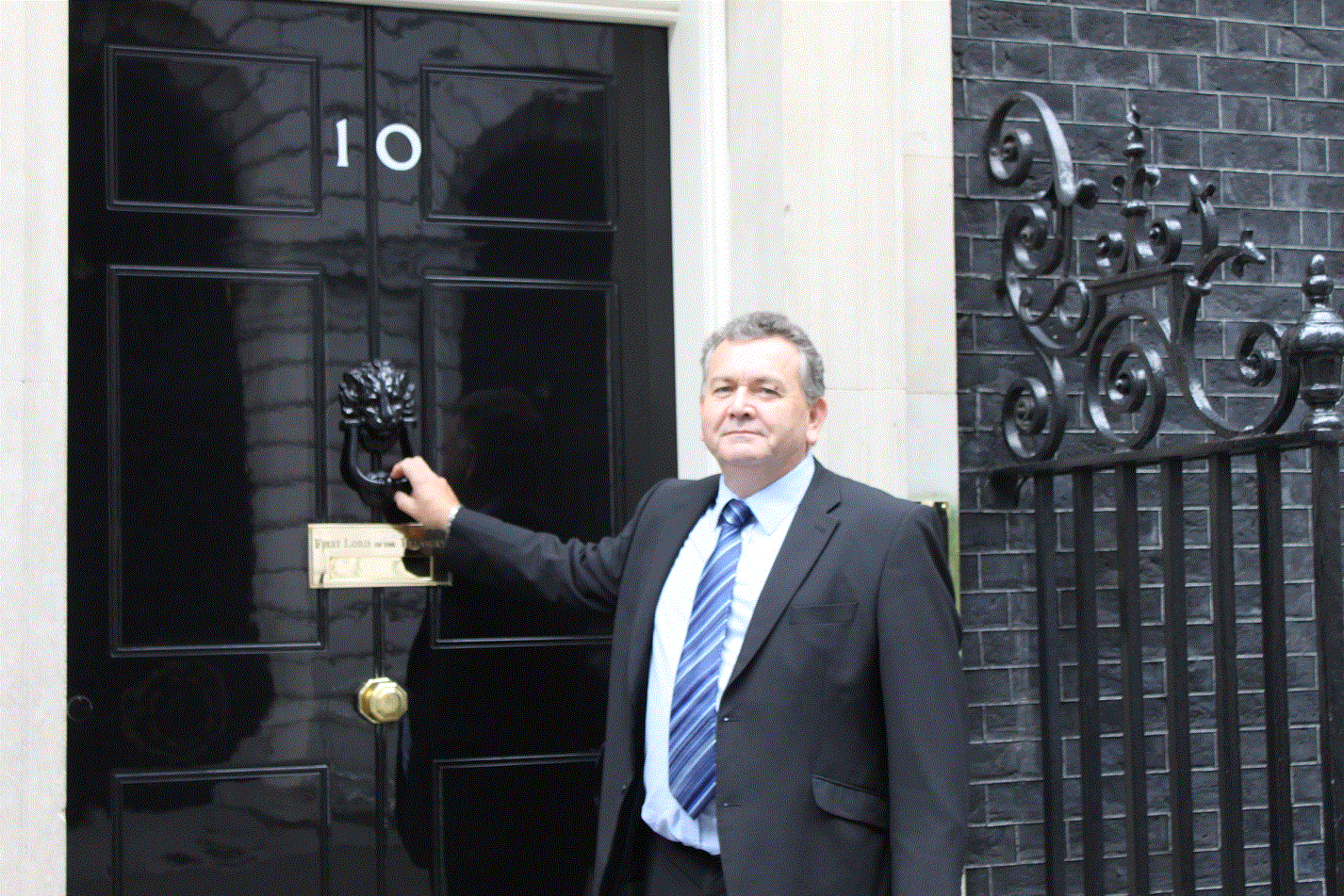

Dorset PCC Martyn Underhill
The man with the weight of the Dorset on his shoulders, Independent PCC victor Martyn Underhill
| Photography: Martyn Underhill, via Twitter

The Independent candidate, won despite what he described as 'an appalling turnout' with 60.1%, (51,930) of Dorset's accumulated first and second choice votes, trumping Tory Nick King who trailed behind with the remaining 39.9% (34,451). Like most other counties in England and Wales, the elections received a poor turnout with between 12 - 20% in Dorset. Less than 96,150 (16.3%) of Dorset's population of over 715,000 exercised their right to elect their PCC candidate.

Of the 25 people we spoke to on the streets of Bournemouth, only ten of the 25 were able to recognise pictures of the PCC candidates for Dorset. A further four were able to point out Martyn Underhill as the victor.

Winton Shopkeeper Hamit Kircal, 24, did not vote in the election: “I haven’t even heard of the Police Crime Commissioner, I’m quite busy every day. If I had someone coming to my door who told me about this then I would have voted."

Dorothy Hurrell, 52, owner of a Winton B&B wasn't surprised by the low turnout: "You didn’t hear very much about it, my husband found out about the election on the internet."


Bournemouth University English student, Adam Fisher, 21, told of his voting experience: "There was a terrible turnout for the vote, we went in at nine o'clock to our polling centre, they told us that 'out of 3,000 people who could have done it only 120 people went in' an hour before polling closed"

The Springbourne resident added "I think you should vote, not everyone is able to vote in any election [across the world], so you have to use your right"

PCC Underhill 'wasn't shocked' by the low voting figures, he told to us in a telephone interview while raising money for Parkstone Rotary club.

"I met people on the elections who didn't know about the election," his answers interspersed with jingles of change and wishes of 'a Merry Christmas' to passersby donating to their fundraiser.

The 54-year-old ex-Sussex Detector Chief Inspector, who previously was second in command of the Sarah Payne Inquiry stood for a simple message, 'keep party politics of Dorset police force'.
PCC Underhill intends a multiphase plan of action to tackle Boscombe, most deprived area in the South West
| Photography: HomeOfficeUK

And with an accompanying £70,000 a year salary, a wealth of weight, pressure and promise overhangs PCC Underhill to fill the position's ambitiously sized boots and live up to the expectation of the public and the position's job description.

Underhill is a month into combatting the multifaceted problems facing Dorset by tackling antisocial behaviour problems affiliated with Bournemouth's nightlife, regenerating Boscombe and encouraging better interaction between the public and the police force.

Starting with Bournemouth's nightlife, built up by the stag and hen custom flooding the quiet coastal town of a weekend, Underhill hopes to curve drunken disorderly on its streets by finding a middle ground.

"We don't want stop pubs offering a couple of cheap shops but we need to engage with them to help the nighttime economy and not to stop people coming, striking a balance." 

Complemented by ministers' plans to raise the average price per unit of alcohol to 45p, which would preventing stores from selling a bottle of wine for less than £4.22 or a strong can of lager for £1.56.

Along with firmer regulations by police and Bournemouth council after nightclub Dusk Till Dawn had it's license revoked after raid in July, where three people were arrested for suspected drug offences.

The closure of the 'open until late' club, popular amongst Bournemouth's student population marks the start of tougher action against nightclubs not complying with local laws.

One victim of the Bournemouth's weekend drinking culture, who wished to remain anonymous, told of how he was attacked after a work Christmas party at the East Cliff Court Hotel. "I was punched in the face and I was shocked, I didn't report it at the time because I didn't think anything could be done."

He added: "This isn't the first time I've had someone square up to me after a night out in Bournemouth, drunken people out on a weekend look for fights."  

Councillor for Bournemouth Central, Robert Chapman, believes more cooperation between police and the council will aid the battle against lavish antisocial behaviour.

He said: "The problems with the night time economy are not just in Bournemouth, it's everywhere in the country. This will hopefully be a message to nightclubs owners to get their act together and work with us."

He added: "However I would and still feel safe walking down Bournemouth high street at night, I wouldn’t bother the drinkers and they wouldn't bother me."

Cllr Chapman, who is also Chairperson of the Overview and Scrutiny panel for Bournemouth's Economy and Trade believes these problems put off other visitors from sampling the areas restaurants and if a better balance was found both sides of the tourism could prosper.

Another challenge facing Dorset's PCC is Boscombe Central, named as the most deprived area in the South West of England.  

"We can change Boscombe and I’m determined I will," said PCC Underhill. This statement will come to the relief of many residents, who have seen the decay of their once beautiful seaside destination. 

The town hosts 60 drug and alcohol rehabilitations facilities, leading to other councils and South West prisons being able to send addicts to the area. But with just under 7% of addicts completing their programmes Mr Underhill and the council will be working with the prison services to help reduce the cluster of non-local residents and reduce the areas already swollen population size.

"We have to start right at the root of the problem stop, changing the demographic of Boscombe, then you need to change the landscape." 

As well being in talks over reducing the amount of Houses in Multiple Occupation (HMOs) and trying to make the area more appealing in attempts to reduce the high percentage of people relocating out of Boscombe within a year of moving there. 

But only a month into the position, only time will dictate whether the Martyn Underhill can viably live up to the hype surrounding the PCC job.

He added: "People are seeing changes in the police force in the last three weeks. I’ve already started changing the direction of force, after three years I haven’t done my job properly if people haven’t seen the impact of what I’ve done. 

"I think It will be a different election [in 2016] with seven or eight candidates all vying for my role."

Tuesday, 22 January 2013

Presenting: Where's Wally interactive show

Recently a group of BA Television Production students asked me to participate in their Where's Wally Interactive TV show...


Fantastic group of people and an amusing show, also a special congratulations to winner Martin Days, hopefully the coveted grand prize of £40 will be spent wisely...

I'll hand over to BATV student Mia Konstantinovaite to bill the show...
"Ladies and Gentleman! Clap your hands and stomp your feet! "Where's Wally?" is finally available online! Big thanks to THE group D, for being such a fantastic team! Also, lots of love to Chris Fasey for being an amazing Wally and Joshua Saunders for being the most entertaining presenter ever and for making a huge effort not to laugh during the show! I love you guys (:"


Also, if you managed not to chuckle after my post 6min 50seconds facial expression of the year...well done.

Tuesday, 4 December 2012

Pebble: a buzz in the air, sniffer bees the revolution in drug detection

  (Featured in issue two of Pebble zine) 

Bees trained to sniff out drugs by latching onto their chemical scents could soon be swarming airports around the world. Joshua Saunders gains an insight into the future of a drug detection that’s set to sting criminals and those involved in narcotrafficking 

 
Honeybees are currently being trained to recognise scents such as heroin, cocaine and other drugs in an attempt to crack down on smuggling within airports. Their ability to smell pollen from over a mile away makes them ideal candidates for the new revolution in drug detection. 

 
One company, Hertfordshire based Inscentinel, are using Pavlovian conditioning - where a specimen is taught
to associate one thing with another unconditioned stimulus. This works for bees
by conditioning them into associating the scent of a drug with sticking their tongue out for sugar.


The bees are introduced to the scent by pressing a button that releases the sample into their airstream. The scientist then touches the bee’s antennae, which is their way of detecting the scent; the bee puts out its tongue and is fed the sugar with water. The process is then repeated to analyse whether the bees stick out their tongues in anticipation of the scent and associate the scent, in this instance drugs, with being fed.
...
 
“You’d see that the cocaine bees are responding, not the heroin bees”

Stacey Kendall, a junior scientist who carries out this research at Inscentinel says, “if they do that, it’s a sign that they have learned to associate the smell with the sugar. If they don’t, half way through the six seconds, you’d touch their antennae again as a reminder and then feed them.” 

“One person can train 30 to 40 bees in a day, you start with bee number one and it will get exposed to the smell for the first time. You work all the way through to bee 35 and then go back to bee number one.” 

Inscentinel condition batches of 35 bees at a time, teaching them in five cycles to ensure the 80-90% of the bees are trained in one day. “They can do it in one cycle but not every bee will,” she added. 

From this, the company intends to provide cartridges of six bees in a vapour detector container, called a Vasor, to be dispatched to airports and other clients for use. 
 
The bees can be trained for over five different drugs and can be taught to recognise chemicals found in the explosive Trinitrotoluene, more commonly known as TNT. 

In developing countries, where it is more expensive to send a medically trained doctor to remote locations, the bees are being used to detect Tuberculosis. They do this by watching to see if they react to the scents given off by compounds found in TB patients’ breath, this has been noted by Dr Steve Chambers - one of New Zealand’s leading infectious disease specialists - as ‘the perfume of tuberculosis’. 

One possible way of utilizing this new method of drug detection in airports would be ‘looking at the cargo going onto a plane not the people,’ which Stacey believes is an area that can be overlooked.

This would work by sucking air from wrapped cargo and then concentrating that air into a filter, then by showing the filter to the bees, you’d see which ones reacted by sticking out their tongue. “You’d see that the cocaine bees are responding not the heroine bees,” and from that be able to deduce that traces of cocaine are inside the cargo.

The screening process is far from the initial fear-filled conjurations of how people believe bees are going to be used to detect drugs at airports. Stacey says, “it sounds like setting bees on people but they are contained in a handheld hoover type piece, so in theory you’d never know that there are bees in there.”

Another way would be to partner the trained bees with sniffer dogs while checking luggage. Stacey explains, “they don’t have to replace sniffer dogs they can work in conjunction. You have a sniffer dog, it’s indicated that there’s something in someone’s luggage [you could then] take them to one side and use the bees.”

To train a dog to become a sniffer dog it takes on average six-months, and a further month to train it to another scent. Up to 100 sniffer bees can be conditioned to associate a scent with sugar in a few hours making it a more financially worthwhile endeavour.
 

At the moment only 35 bees can be trained by hand, but 100 could be conditioned with an automated conditioning unit, where the scents could be released directly into the machine along with the sugar incentive. While this approach may not be as thorough as conditioning each bee by hand Stacey says, “when you put in hundreds of bees it doesn’t matter if a lower percentage are trained, you still get out more bees at the end.”

Inscentinel are using European honeybees, officially known as the ‘Apis mellifera’, because they are one of the most commonly found species of bee, allowing them to be trained worldwide. Stacey explains, “they are not really special, they’re not going to be any different from those used by bee keepers to pollinate an apple orchard.”

Inscentinel are currently working towards a field trial, this upcoming February, with a FTSE 250 company that wished to remain unnamed. 

So far, the company has faced little opposition from the outside world and animal rights activists. Stacey says, “we’ve had one or two angry emails or letters... but that’s probably to be expected.”

“It’s hard to know what’s going through the head of the bees, but they’re getting more sugar than they would be able to find naturally. If you put any stress on them there would be no point because they are not going to behave as they should, and may not learn or respond [to the conditioning]. Their life expectancy outside of the hive is just eight to six weeks so it doesn’t appear to, broadly speaking, affect them,” she adds.

After being used by airports the clients would then return the bees to Inscentinel. When the bees return from duty, the company intends to let them return to a normal life. Stacey says, “the idea when it was set up was that we’d get fresh bees, train them and hand them out to whoever is using them. Then when they return the used bees, we’d release them to a different hive, like a retirement hive.” 

Pictures courtesy of Inscentinel

Pebble: from end to end, John O'Groats to Land's End


  (Featured in issue two of Pebble zine)

Scott Westwood walked the length of the British Isles, without spending a penny by relying on the generosity of the public. Now the raconteur retells his tumultuous tale of six weeks and one day, journeying to the furthest corners of Great Britain


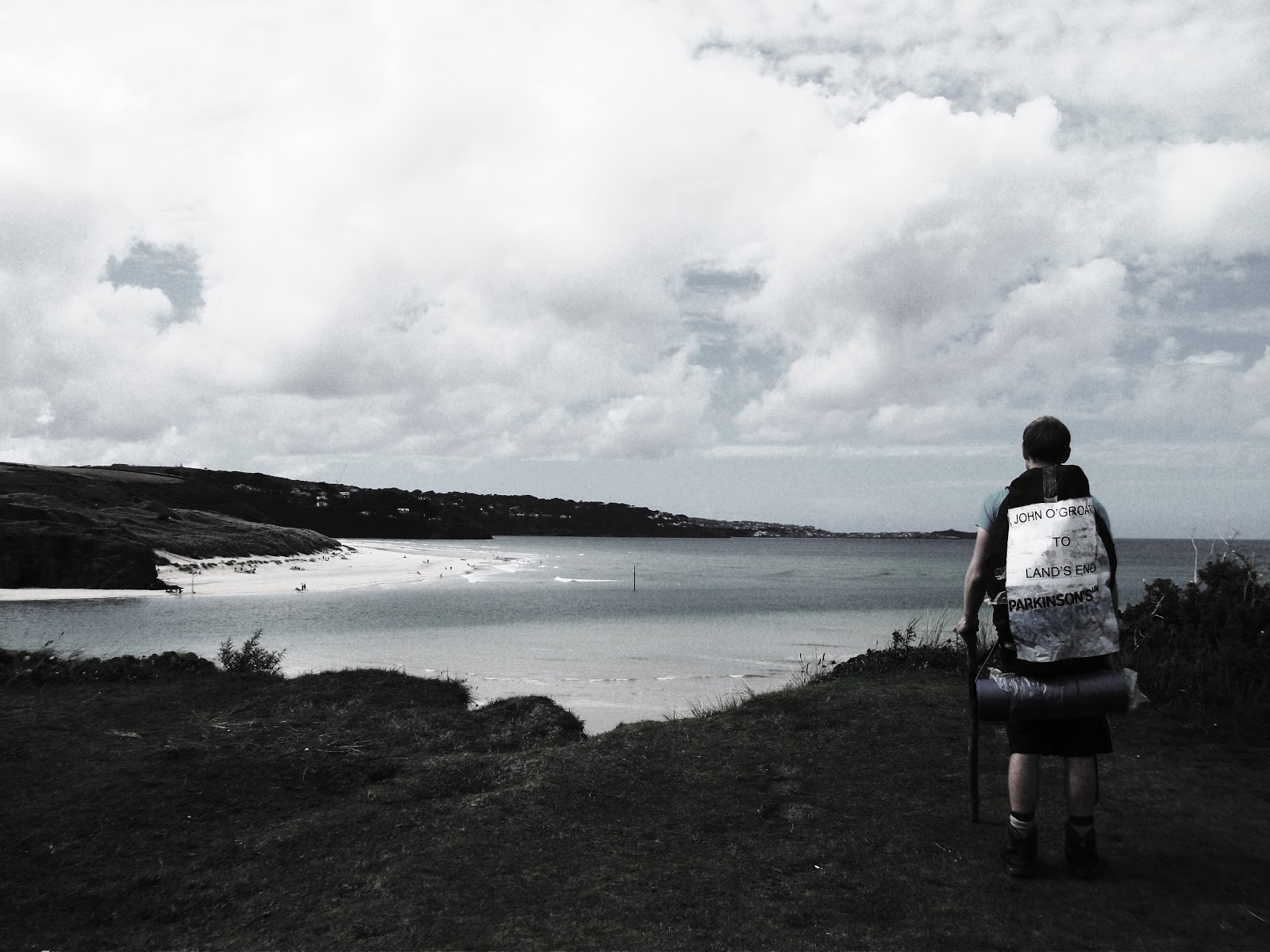
“When you think about it, the United Kingdom’s quite a small island compared to the rest of the world,” Scott Westwood tells me, only a month after completing a 43 day trek from pole to pole of our ‘small island’, raising money for the charity Parkinson’s UK. The imposing John O’Groats to Land’s end journey consists of over 1,200 miles alone. Without counting Scott’s additional ten and a half miles scaling Ben Nevis, the largest mountain in the British Isles, a few days into his walk. 

From the end of the pier at John O’Groats, Scott embarked upon the initial day of his solo, moneyless venture where he would depend upon the kindness of strangers to ensure he had food to eat and a place to sleep.

He spent the previous night on a train for 12-hours heading to the nearby town of Thurso, Scotland, over 550 miles away from his Birmingham home. On his last night at home before the challenge, he relaxed and avoided mulling over the quest before him.

The total distance actually equates to a few hundred miles more than The Proclaimers proclaimed they would walk or three quarters of Frodo and Sam’s journey to cast ‘the one ring’ into the fires of Mount Doom.

The imposing challenge would test his determination, sanity and the ability to carry on walking despite having swollen and severely blistered feet. “It didn’t hit me that it was all real until three days time when I was in pain,” he said.


Equipped with nothing other than the clothes on his back and a rucksack containing a stash of energy bars, as well as a tent and water bottle, the weight of the bag soon took its toll.

To keep on schedule he needed to maintain an average of 21 miles a day; with a couple of one-day marathons to make up extra miles, which took Scott 14 hours to walk due to his heavy bag. “If I worried too much it would have held me back,” Scott said. 

Five days in and arriving at Inverness, it was already a tough battle to accept the lengthy challenge ahead. But with recurring bouts of determination he fought off his body’s calling to give in; “what else am I going to do? I’m going to carry on walking because that’s the only thing I can do,” he thought. “Your life is waking up, walking 22 miles and going to sleep... This is what you do now,” his mind kept telling him. The regular campsite consisted of fields, parks and woods but also...

“I carried a pebble from the most northern point of Scotland and brought it to Land’s End, now I’m done”

...strangers would offer him a place to stop. “I’d get talking to people in the street and they’d say ‘Where are you staying tonight?’ and I’d reply, ‘wherever I can find.’” Throughout the journey Scott stopped on people’s sofas, in their spare rooms, in B&Bs, hostels, and some five star hotels. “I was very lucky with all that,” he added. 

On Scott’s third day of walking, there was one man in particular whose help left a lasting impression on the walker. Keith had seen Scott on the road and offered to send the trolley of belongings that he had acquired ahead to Glasgow to collect there, “It was kind because I wouldn’t be going to [Glasgow] for another week and a half”. Keith also put him up forthe night, fed him, bought him a new water bottle and created a ‘John O’Groats to Land’s End – Parkinson’s UK’ laminated sign for his backpack. “Keith O’Rourke, this bloke was an absolute godsend,” he said. 

A few days later and Scott was already adopting the look of a traveller, having collected two walking sticks to use en route. One of which lasted for the rest of journey. It was white driftwood with a hand groove, “It started at my shoulder and ended just above my waist. I’ve never felt more affinity with a piece of wood. It was my companion and protection if someone tried to attack me, and it was something to lean on.” 
On the 26th day of the trek, Scott scheduled his only day of rest, back within his home in West Bromwich, Birmingham. Scott said: “It was horrible fate, the amount of train stations I walked past saying trains direct to Birmingham. I was just outside Wigan when I walked past my first sign for Birmingham- that was amazing. I was counting down the days to get home and it was nice not having to beg for food [for the night], stopping in my house, in my bed,” he reflected. But the break was short-lived as the following morning he was back on the road. 

“Leaving home was heartbreaking having to leave my door to walk for another 15 days was just horrific.” But with the last stretch of the journey ahead of him the food he had stocked up on slowly diminished, “there was a point where I walked 12 miles on just a banana.” Ten days away from the finishing line, and Scott realised he would have to go hungry for the day to ensure that his supplies would last to Taunton, where he was set to meet some friends. He headed towards Weston Supermare the day he acknowledged he must go hungry. 

But an hour into the day and his journey took him past a health shop, “the man comes out, stops me and says, ‘have you really walked this for five weeks, with no money’ and he said, ‘come in, take as much as you want.’” His luck continued
to turn around, as he was offered a free Carvery from a barmaid he was speaking to, and later was invited for some food by a kind lady and her son.

“Later, I’m on the pier, the sun’s setting in front of me, a bloke comes up, starts chatting to me and I end up getting bought fish and chips. All on the day I said I was going to be hungry. “I thought if that’s what the universe is doing. If I say I’m hungry today and it provides me with all this, I should have done it earlier.”

At St Ives the walk was drawing to an end, Scott felt emotional as he walked through the memory filled streets that he spent many childhood years in, “the blazing sunshine came out and I knew it was going to be a good day because I’d walked the route a hundred times over.” 

He reached the finishing line at Land’s End, Cornwall, by 6pm on his 43rd day. The journey that had taken him through more than 134 of Great Britain’s villages, towns and cities, was now over. “I’d planned in my head how I’d feel crossing the line since Glasgow, and it wasn’t what I felt. I finished and I just felt like I had to carry on. I was like, ok now what do I do tomorrow? I got so used to walking that I couldn’t stand still.” 

He rejoiced with a lovely reception of family members and tourists, brandishing an appreciative banner from Parkinson’s UK. Stained from 43-days worth of walking and the non-alcoholic champagne his stepdad sprayed over him, he made his final thank yous, with passing tourists honking their horns in the background. “But it was a lie, I’m not done yet,” he thought, noticing the sheer-drop into the sea only 100 meters away. Scott, his mother and stepdad took the final few strides to the cliff face and the furthest corner of the United Kingdom. 
“I had a pebble, no bigger than my index finger, with me that I’d carried all the way from John O’Groats - the entire journey,” he slung the smooth black pebble into the sea, heralding the end of his voyage. Moments later at the cliff edge elation swept as Scott accepted that it was all over, “I carried a pebble from the most northern point of Scotland and brought it to Land’s End, now I’m done.”

During the six week and one day walk, he was solely dependent upon the public and their kindness, “literally if people weren’t generous then I would have starved.” Scott has raised over £2,500, half of which was donated to him on the trek down. “People were giving me twenty pound notes, fivers, cheques, change, bar staff gave me their tips, and little children gave me their chocolate money, it was truly unbelievable.” 


“Don’t put this in the article, but I walked the same [amount of days] as Jesus you know, we both walked for forty days,” jokes Scott, who now is back for a second year of intensive training at The Royal Academy of Dramatic Art.

“I haven’t done any exercise since coming back. On the walk, I lost a stone and a half so had to put that back on,” he now waits for his certificate from the official John O’Groats to Land’s End association to commemorate his journey. As well as verification for a potential added accolade, “I believe I may be the only person who’s walked solo from end to end.” Scott finally reflected, “it was a great achievement that I walked the country, but it’s the people I met and the thousands and thousands of stories that I have, which I wouldn’t change for the world.” 

Find out more about Scott’s journey at www.justgiving.com/ScottWestwood2012


Friday, 30 November 2012

Pebble zine: Issue two

Take a look at December/January's edition of Pebble for an assorted array of features, lifestyle, fashion, beauty, music and culture.

Here's what new from the features section:
  • Scott Westwood, travelled across the UK to its furthest apart corners solely reliant upon the public's kindness
  • Sniffer bees could be swarming into airports around the world as the revolution
    in anti-drug smuggling measures
  • Two sisters, splitting lives and growing up in different countries
  • El Mar, Mi Alma - the sea, my soul: Chilean surf film
  • Breaking into the industry: the Christmas industry
  • How spiritually intelligent are you?
  • Sibling rivalries: what you and your brothers and sisters argued about
  • 'Honey Curls', a sweet poem to my sister

  • Special thanks to Scott Westwood, Stacey Kendall, all our contributors and the design team.

    Go, read it now.

    For more from Pebble zine check out the website: www.pebblezine.com

Thursday, 29 November 2012

Presenting: Whitwam Studios

The talented Natasha Salmon and myself, was asked to present a corporate launch video for video graphics and virtual studio software developer Whitwam Audio Visual Solutions.

The software gives the user the capability to build virtual studios from scratch and incorporate banners, amongst other graphics in real time so that minimal post production work is required.

This could be used for television shows, business presentations, and sports news, as well as others. All that's truly needed is a green screen and the system can build the rest. Check out the video below...


 Before you is a preview of the launch video, more to be released.

Sponsored by:

Top Posts this Week